
June 2026

Hands holding me down.
Hot breath sour on my lips.
Six eyes watching, two eyes closed.
A room without windows.
A room without a view.
Strength fails my body.
Lust thrives in them.
I see spots of light; one, then two, then stars.
The sweat-stained mattress gives way to fields of barley.
A happy place in an unhappy world.
The red before the black, the black before the light.
A body that shivers in the sun, an innocence come undone.
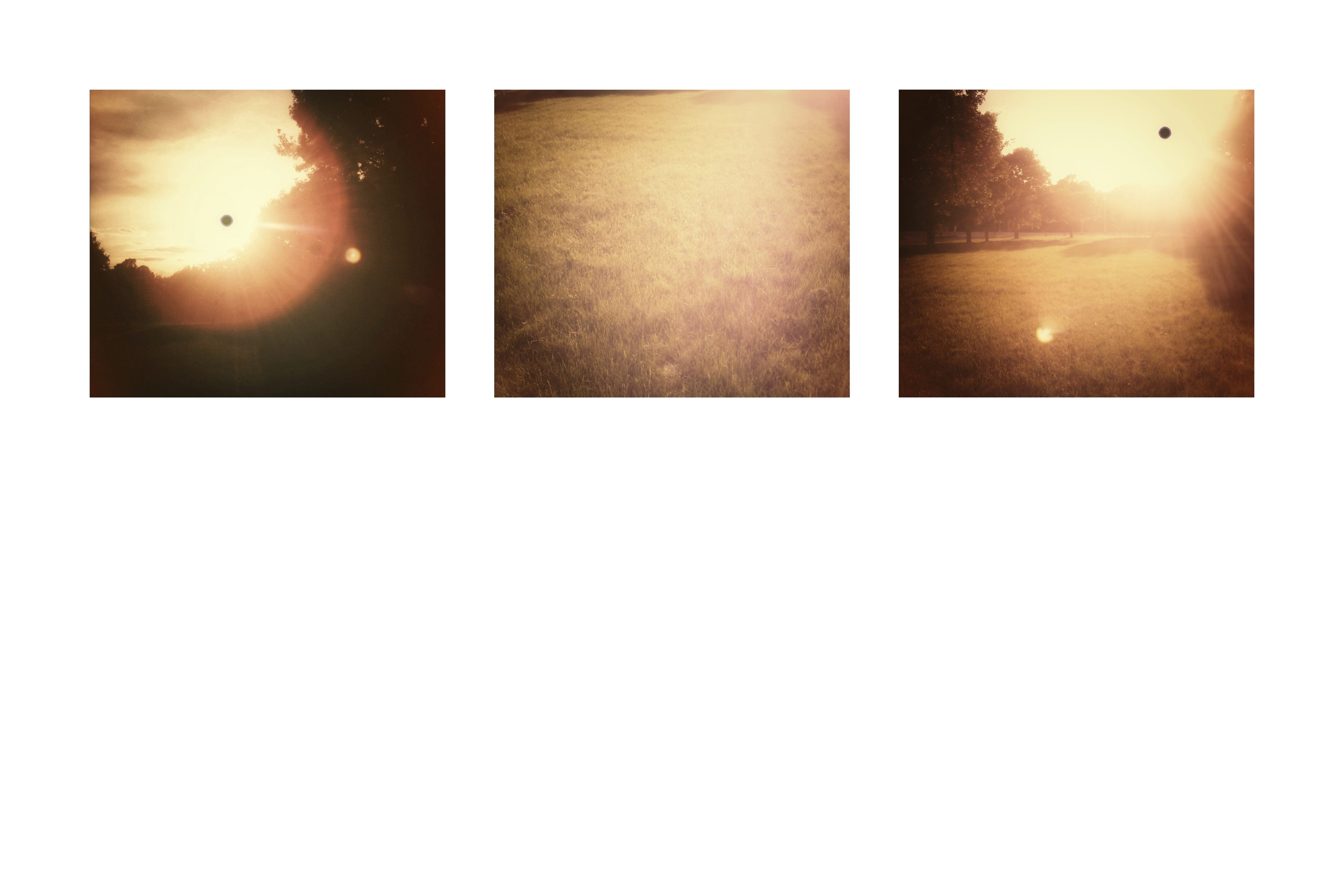
Though I have a vague pre-existing understanding of involuntary memories, I haven’t researched or explored the phenomenon deeply, which is going to change because I find this sort of uninitiated memory recall particularly potent with photography when it comes to text and image pairing.
The above piece is a first formal attempt at manifesting this idea into a form, and I rather like the triptych panel format a lot to explore this idea of involuntary recall.
After taking a text and image workshop recently, I have been thinking about how and when text and image work best for me, and I feel that when it comes to text and photography specifically, the pairing works best when both the text and photograph seem to be unrelated, yet when paired together, they become idiosyncratic.
A photograph can only get at so much, and even still, I often believe that the photo is enough, that it can hold its own without text, but sometimes, text can elevate, complicate, and broaden the possibility of a still image.
Memories are a good example of where photographs provide portals to worlds that text can help flesh out more completely, or complicate them more profoundly.
The idea of involuntary memories stems from sensory triggers (i.e. the scent of laundry detergent, the taste of mildew in the air, the sound of a car door closing, light reflecting off a mirror in the hallway, or the feeling of sharp gravel against your skin), and photographs for only being visual vessels have a way of bringing up all of these senses involuntarily depending on the picture and the person viewing it.
Putting words to these unexpected sensory recalls shouldn’t explain them, but rather elaborate them, expanding the world of the image, and not confining it with language that adds a full stop to the experience of the photograph.
At its best, art is a conversation between the maker and the viewer/listener/reader, and all good art shares a certain amount of ambiguity that allows for each individual to have a personal experience with the work that can later be shared as a collective coming together when we discuss our interpretations and feelings towards a piece of music, a film, a poem, a book, or a photograph.
Art is interpretation, and that is what makes any good artist unique: their ability to use the same tools, the same language, the substance of life, and come to vastly different expressions of shared realities.
I want to keep pushing and exploring these triptych panels with text based on the idea of involuntary autobiographical memories, as I feel like something interesting is happening there, worth exploring.
In other news, I have decided to go back to school starting this September to study to become a Library and Information Technician, for a future working in either libraries, archives/museums, or galleries.
My injury is healing well, which means it is time for me to start a progressive return to work, and I couldn’t bear the idea of going back to my job without a plan for a future outside of working in a warehouse.
I turn 38 in October, so I should be able to graduate from college by 40, pursuing an aggressive part-time online course load while maintaining full-time hours at work for income.
After 40, there are still 25+ years of work to go, and I couldn’t bear the thought of retiring in a warehouse with a broken back and nothing to show for it.
Well, that brings you up to date with me, folks! As always, thank you for reading, and I’ll see you around in the next post.
Take care, Matt.
Very cool, man! I'm now inspired to do more "short-term" printed projects. I feel like, as photographers, we only place high value on these long-form, long-term projects when we need to do more short-term work. There is power in feeling a sense of completion & in testing the waters to see which direction we are headed.
Great piece of work, Matthew. I agree with you, 100%. Don't get me wrong, I had some great times in the profession I committed to for 43 years and the pay and conditions were decent. However, at 65, I wish I'd worked out what I really wanted to do, retrained (if I'd needed to) and gone for it. Best wishes for the future. Heal thoroughly and make the most of the all-too-brief time we have available to us.