
The art of sequencing: How to make your film photos tell a story.
Photo sequencing is more than just arranging images; it is shaping how we see, interpret, and feel a body of work.

Since I started collecting photobooks, I have been obsessed with how photographers and editors create sequences, the wide variety of approaches, and the process of making a successful edit and sequence.
I am not a professional; I am passionate. Any advice I give you today or in any of these process and practice-type entries is based on what I have learned from books, podcasts, interviews, and videos with other photographers, editors, writers, and curators on the topic at hand, along with my personal experiences and workflow.
I will also propose today’s post as an assignment for those interested in trying it out, and I will happily create a follow-up post with all of your results if you choose to try out my approach presented here today.
That said, I will preface today’s entry by saying that I am not one to try out assignments literally but often use them as creative fodder in my subconscious.
So, to avoid being hypocritical, I want to be clear that I don’t always follow my ideas to the letter.
Still, whenever I am in a rut, I like to pick up the book, turn to a random page, and read some entries to stimulate my mind with different ideas and approaches. That alone has been very helpful to me in the past.
The idea (I would rather call it that than an assignment) I will share with you today derives from using the inherent limitations or containment found in analog photography (specifically with canister and roll films like 35mm and 120).
However, I am positive that these same constraints and limitations can also be derived from the digital process, as we’ll see with further explanation.
The idea:
I was recently going through my film scans from my first couple of years of photography to see how I have changed as a photographer and to question if there was anything in those early images to make any printed matter from (such as a zine).
I noticed that each roll of film was almost a self-contained story/narrative about my interactions with the outer world through the camera’s viewfinder.
At the time, I was exposing a lot of 35mm film (both black-and-white and colour) with various cameras, from cheap plastic point-and-shoots to my cherished Yashica Electro 35 GSN rangefinder, Zenit TTL and Pentax P3N SLR cameras of my daily experiences before I started to work on projects or create bodies of work with specific goals and intentions behind them.
I often had no problem exposing a roll of 36 exposures in one outing, whether that was a photo walk around the neighbourhood, photographing my eccentric neighbour or, as I liked to call him, “The Mayor of St. Henri” (St. Henri is the name of the neighbourhood I was living in at the time) and our backyard barbecues, or finding rolls of film that took a little longer to work through connecting different places and times in one little light sealed canister.
The reasoning:
This containment or limitation of the roll of film and its predetermined number of exposures got me thinking about how this could function as a straightforward and helpful tool for learning how to create sequences without the daunting task of working with hundreds or thousands of images one accumulates when working towards a goal-oriented project.
Now, a roll of film has a slight advantage in the limitations department since it is built into the medium.
Still, I would extend that one could go out for a photo walk as an example and limit themselves to 36 exposures (if we are going to agree that we are working with a standard roll of 35mm film here) or limit yourself to working with 36 exposures in whatever manner suits your workflow best.
Once you have completed your 36 exposures, stop there and use this limitation for our “assignment.”
You may even have some exposed rolls of the film already developed and scanned that you can use to try out the idea I will present to you next.
If you work digitally, maybe there was a photo walk, a week, or a month on one of your SD cards from which you can also select 36 images for this assignment.
The assignment:
Now that we have our 36 photographs, our next challenge will be to edit them down to 15 to 20 photos for our sequence.
We’ll want to make an inventory of our images to see what we are working with; this inventory can range from the subject matter (cars, flowers, people, for example) to types of lighting and contrasts, colours/tonalities, weather conditions/atmospheres/moods, the body of the photographer in relationship to what’s in the frame (i.e. how close or far away we are from what is being photographed, are we straight on, off to the side, elevated, low to the ground, etc.), to camera-based things such as focal lengths, depth of field, and exposure times.
The inventory is to help us better understand what we are working with, if there is a recurring theme or motif that we’ll want to play with, if there is a particular place or setting we are exploring, what kind of emotional response are we having to the images compared to an intellectual one, is there linearity to the pictures because they were made in one session or are we dealing with something more ambiguous and cinematic with a more complex story contained within our 36 images.
If you can, I highly recommend making prints of all 36 images so you can play with them physically, see how things resonate next to each other, if pairings of images create new connections, add harmony or dissonance to each other, and so on before arriving at your edit of 15 to 20 pictures.
To help illustrate the ideas I am trying to convey today, I will share a sequence I made from a roll of film I exposed one summer day.
The sequence shows the Mayor of St. Henri cleaning the back alley behind our apartment building and the barbecue we shared that day as an example of a (almost) linear type of edit/sequence.
My edit and sequence consist of 20 black-and-white photographs, the selection of which was based on the Mayor cleaning our back alley, the variety of ways in which I photographed him, his environment, and my physical presence throughout the process through my body’s relationship with the Mayor (being up close to being distanced to being removed and photographing him from my patio door).
I printed all the images as four-by-six-inch prints on matte paper and scanned them.
Today's pictures are print scans, but a more practical way of making workprints is to use Photoshop's contact sheet option.
If you use Photoshop to create a contact sheet of images, you can cut them into small workprints.
These will take up less space and ink than a stack of four-by-six-inch workprints.
Still, either of these methods will be more than adequate for this exercise.
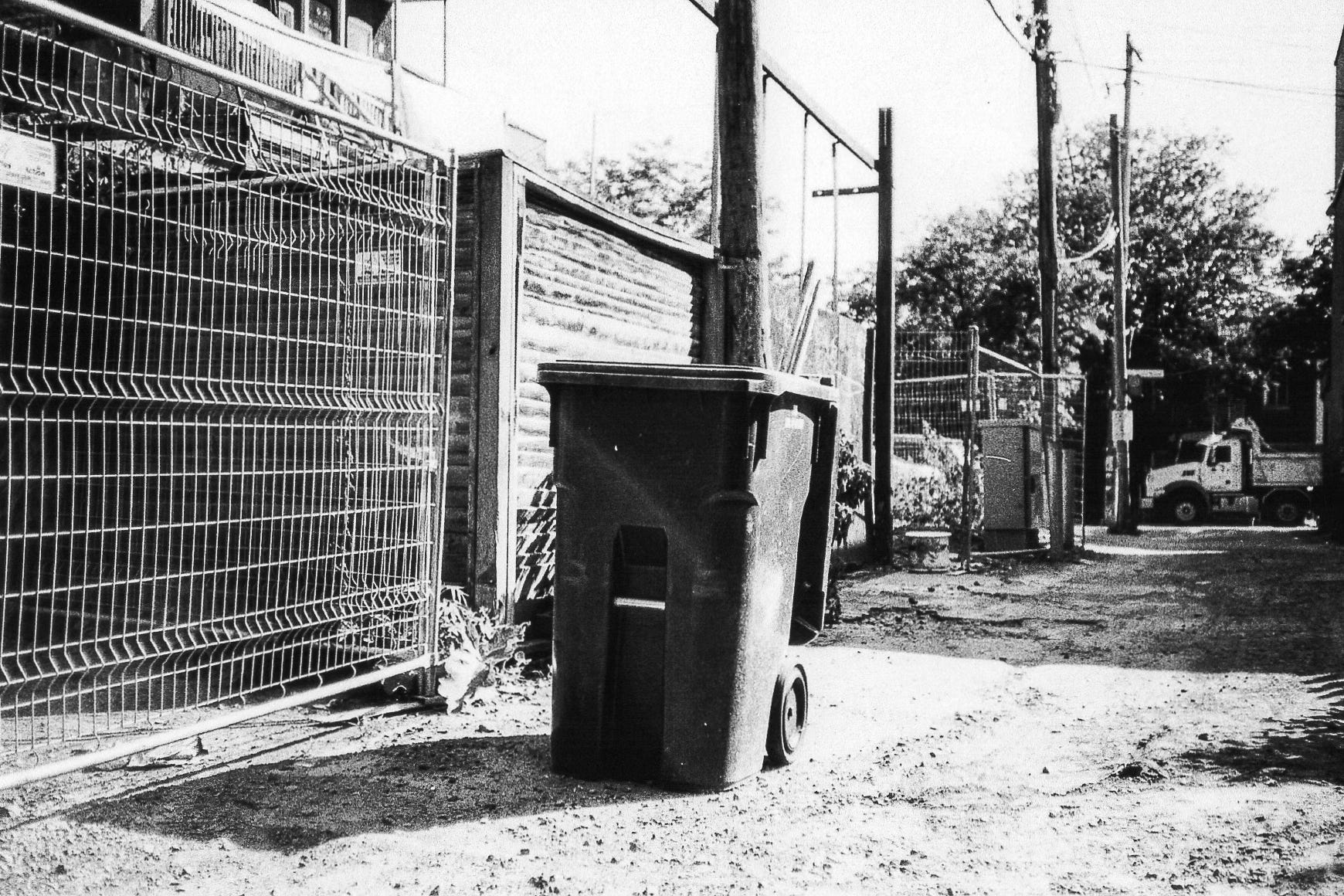
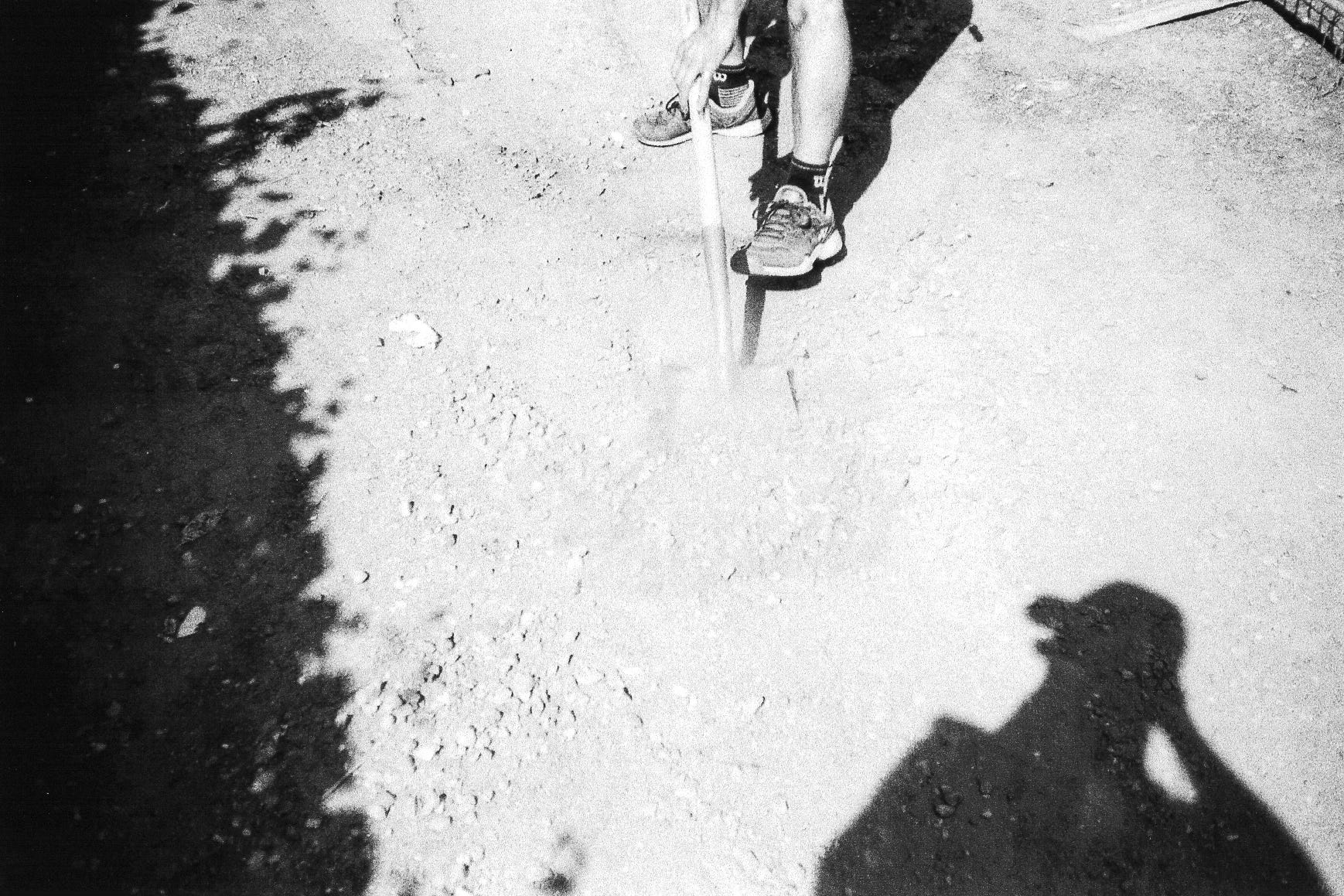
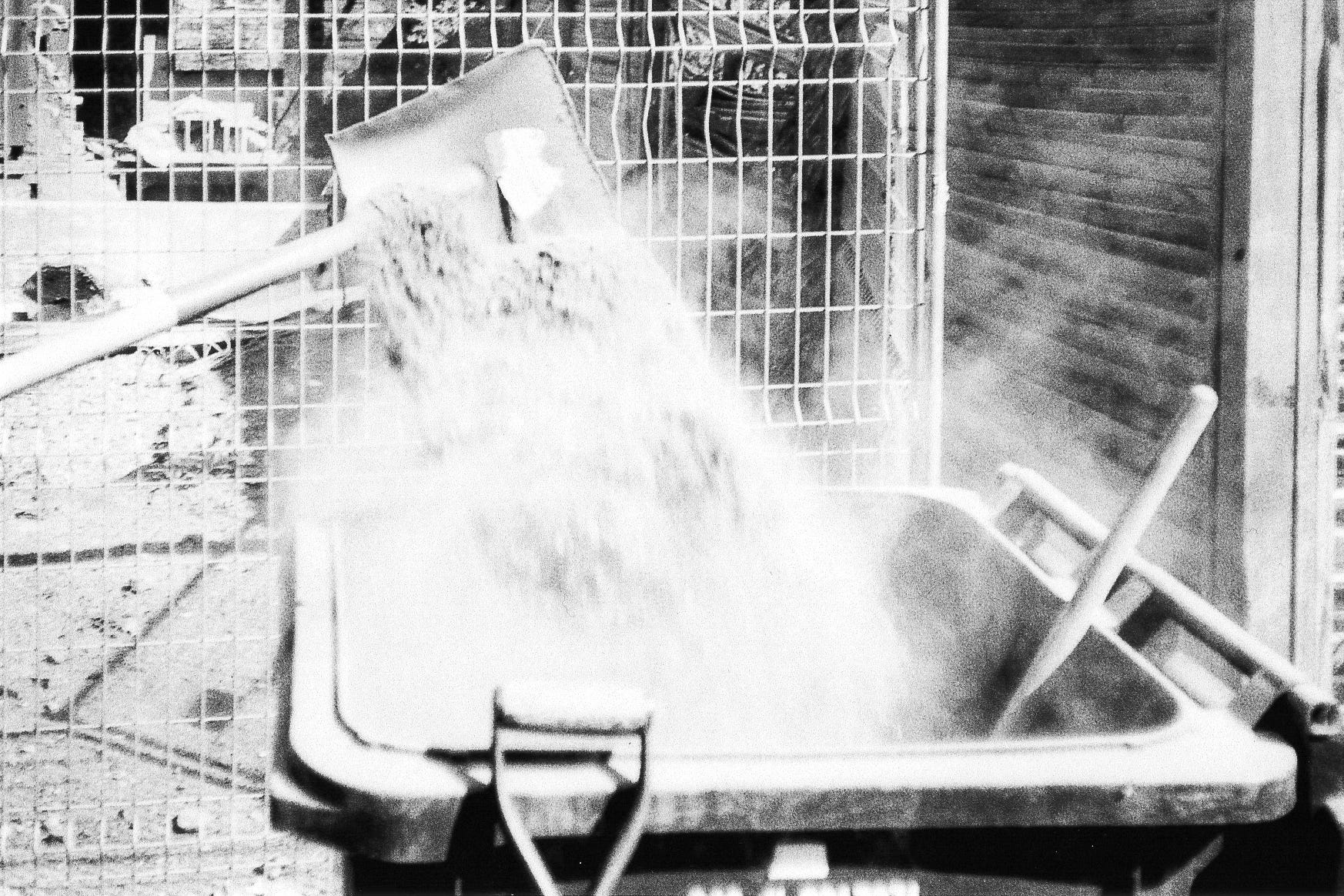
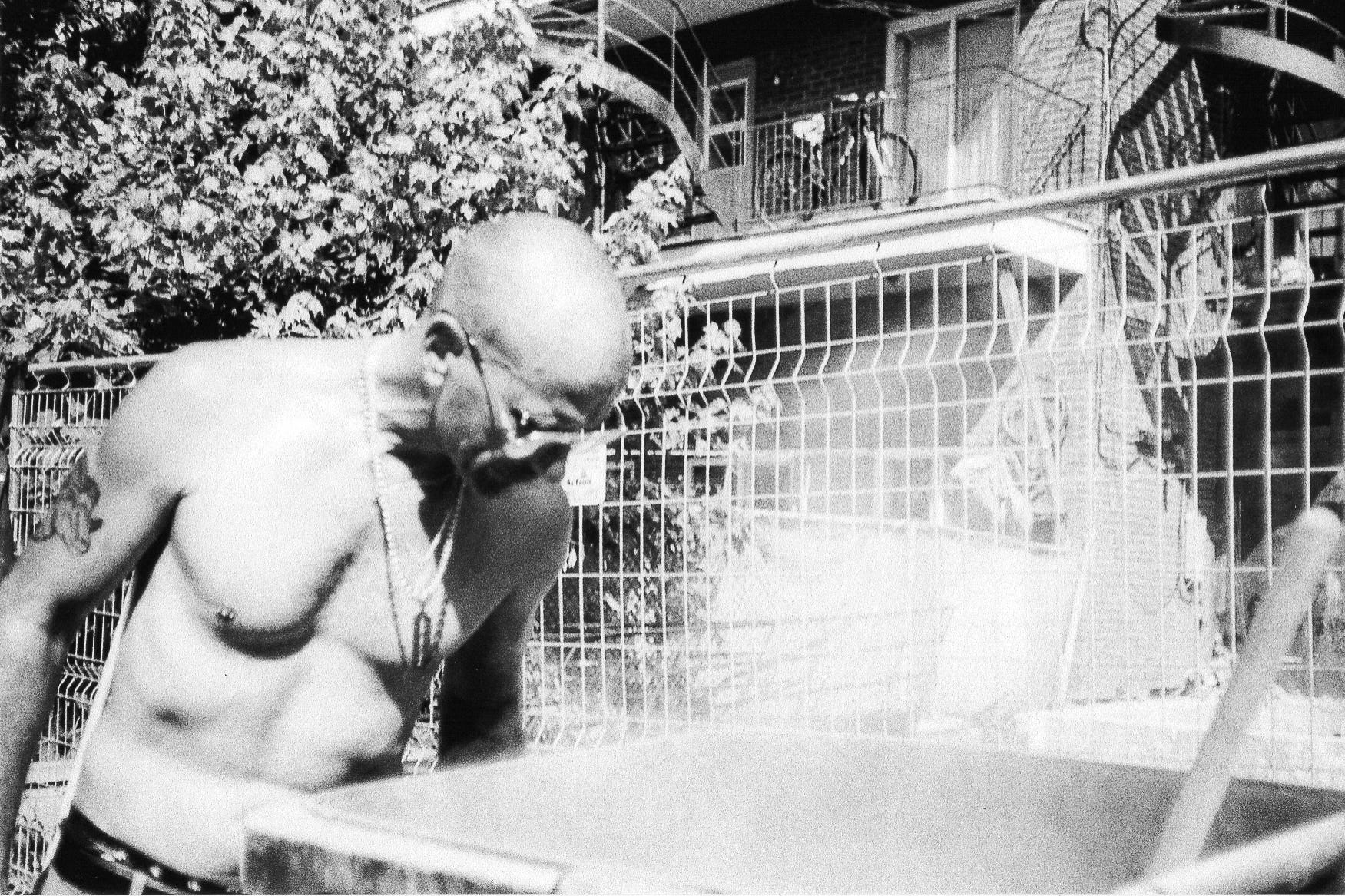
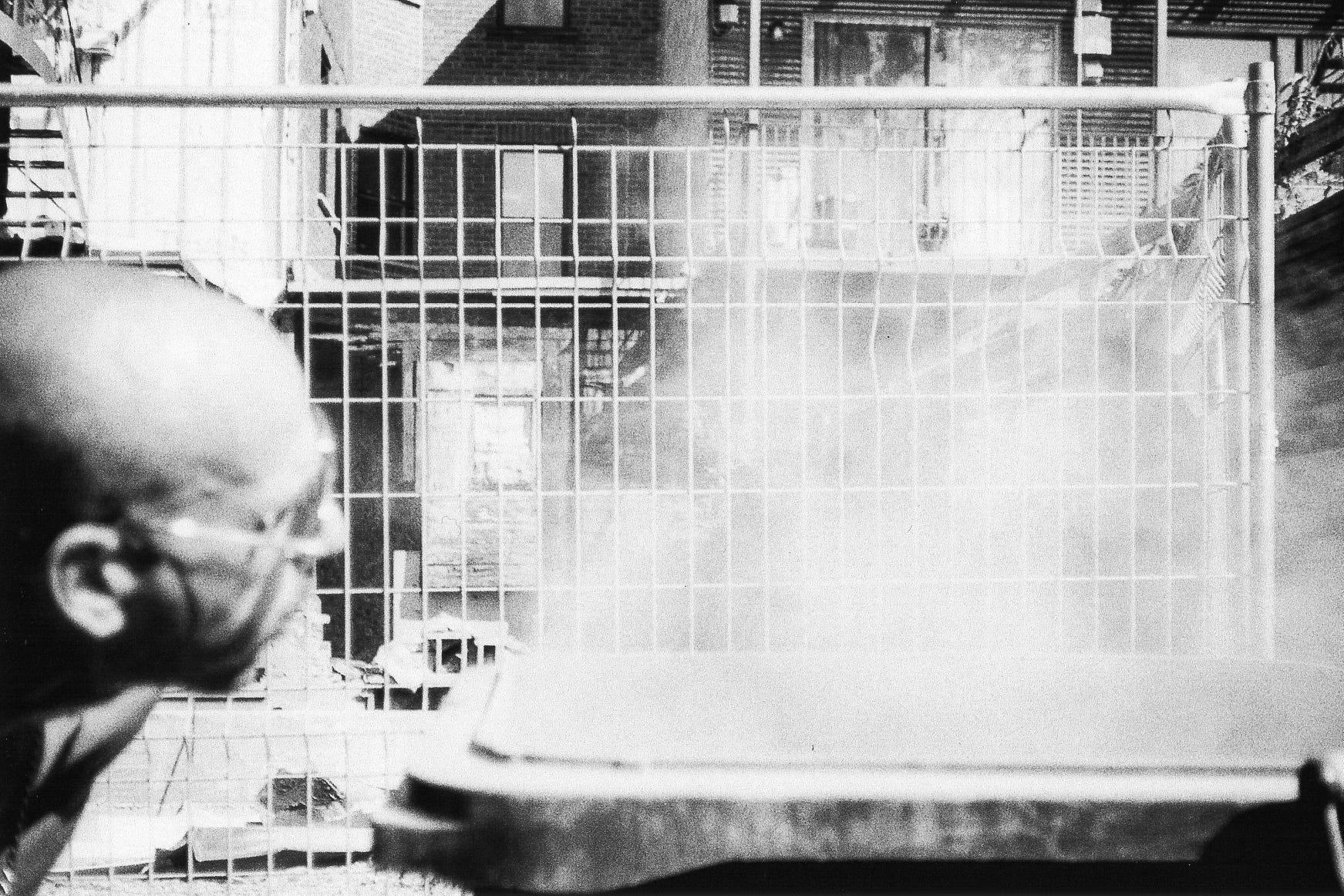
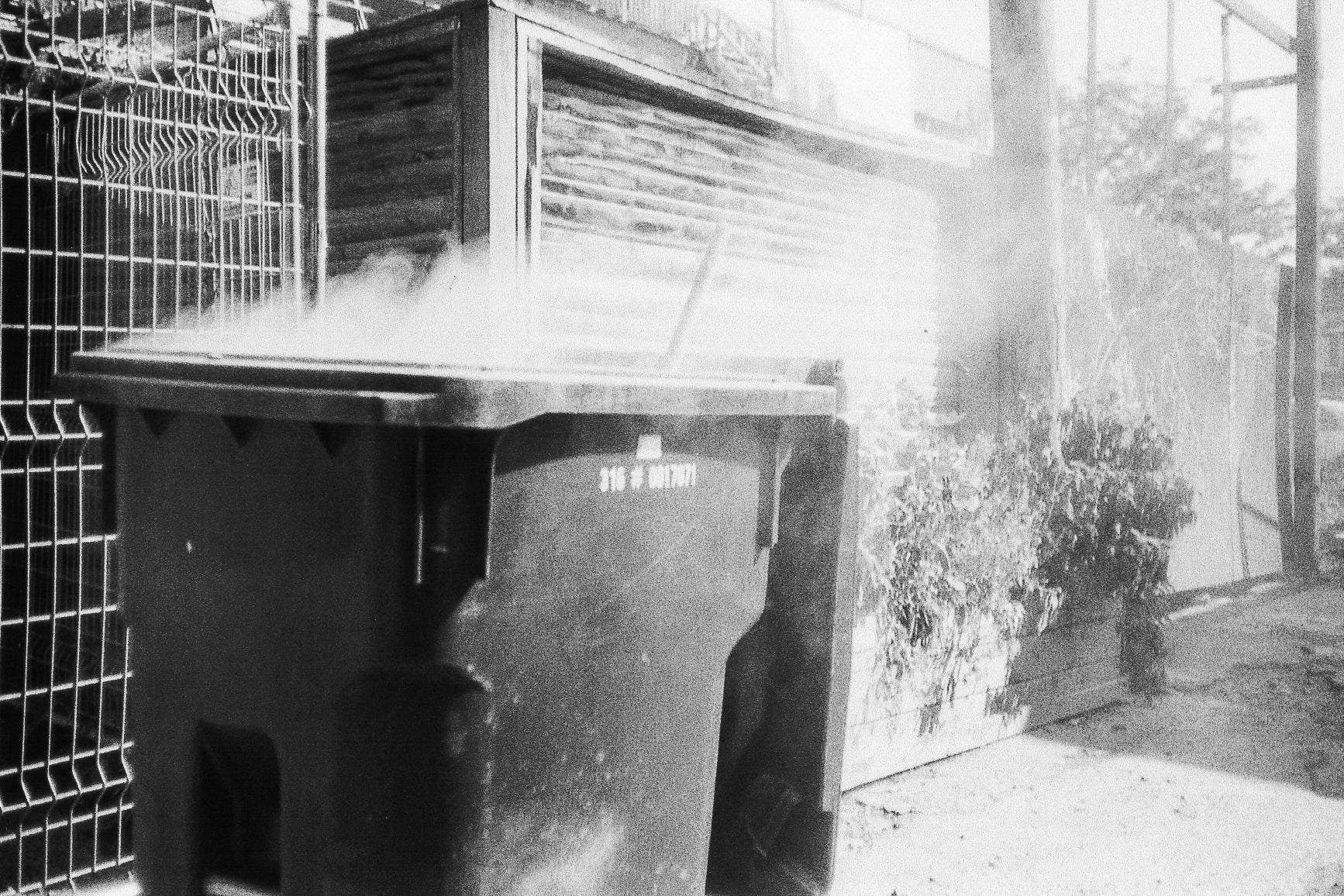
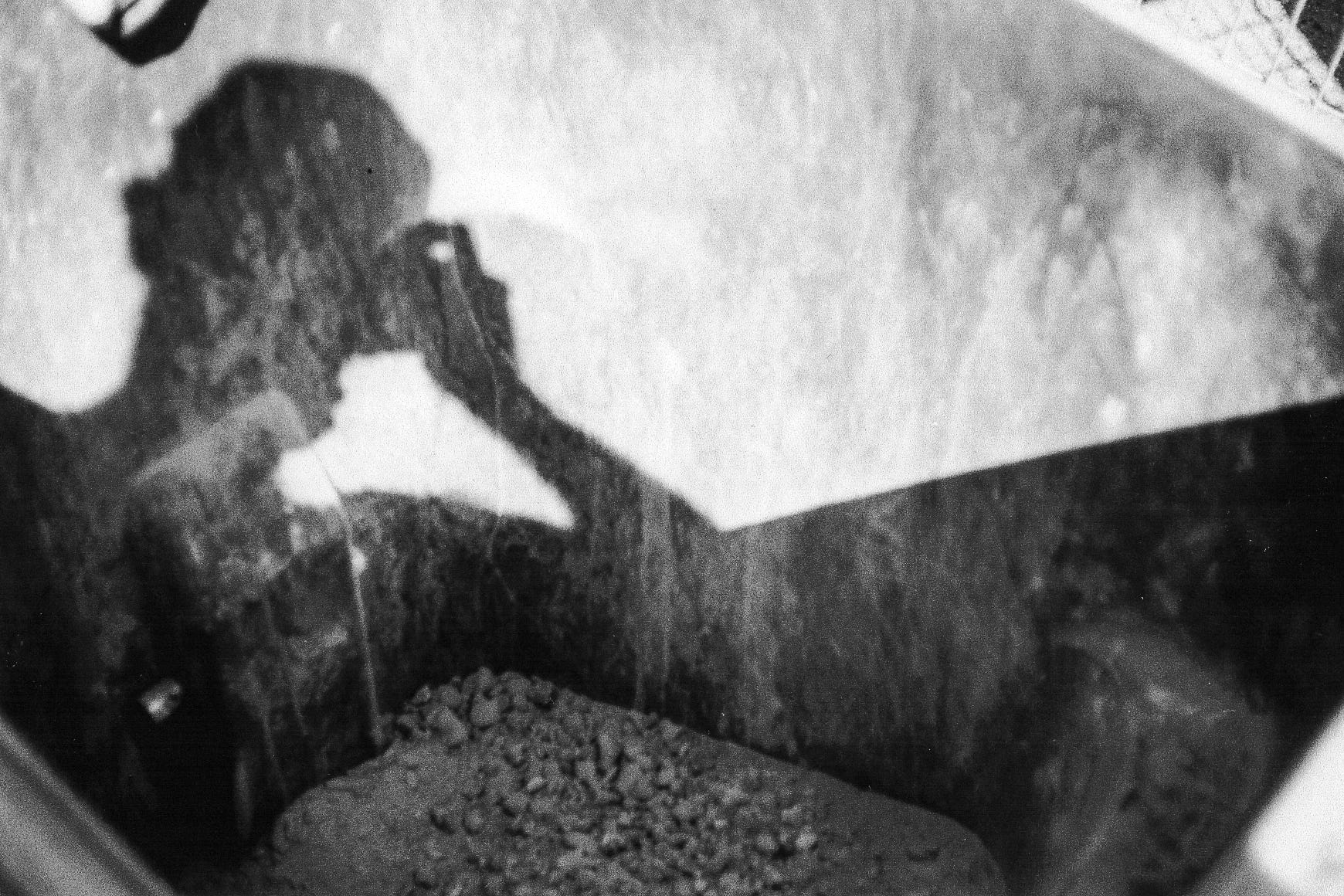
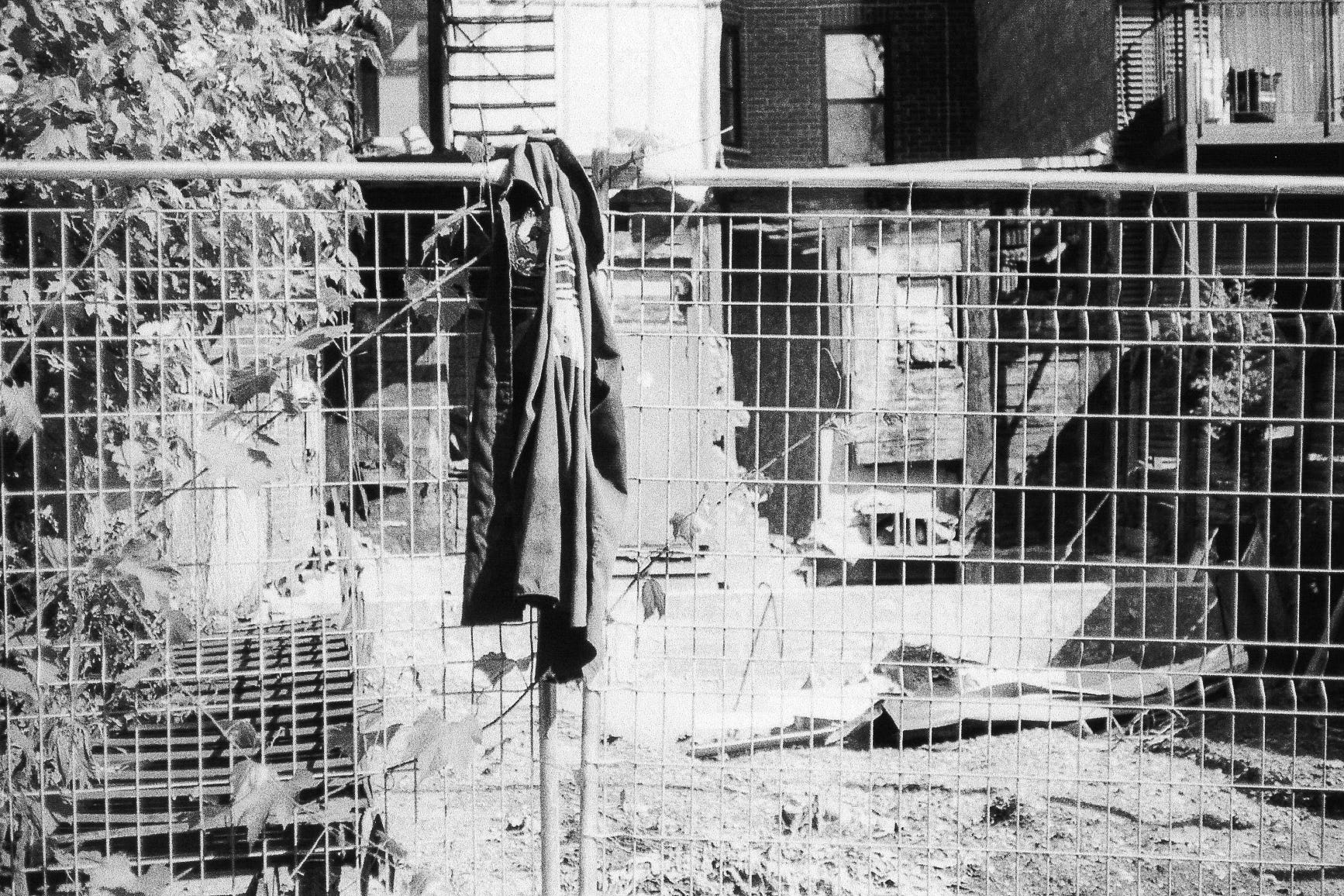
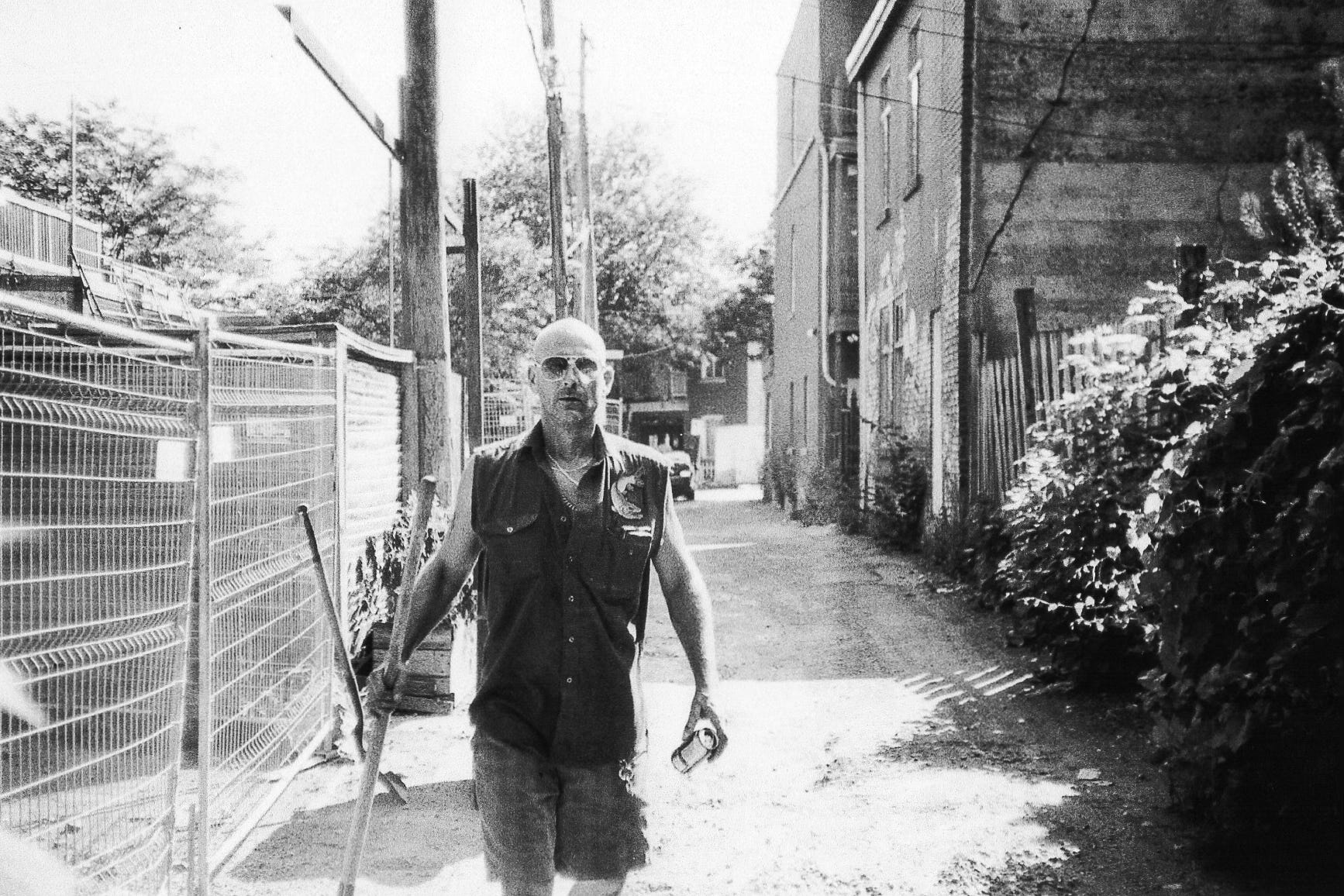
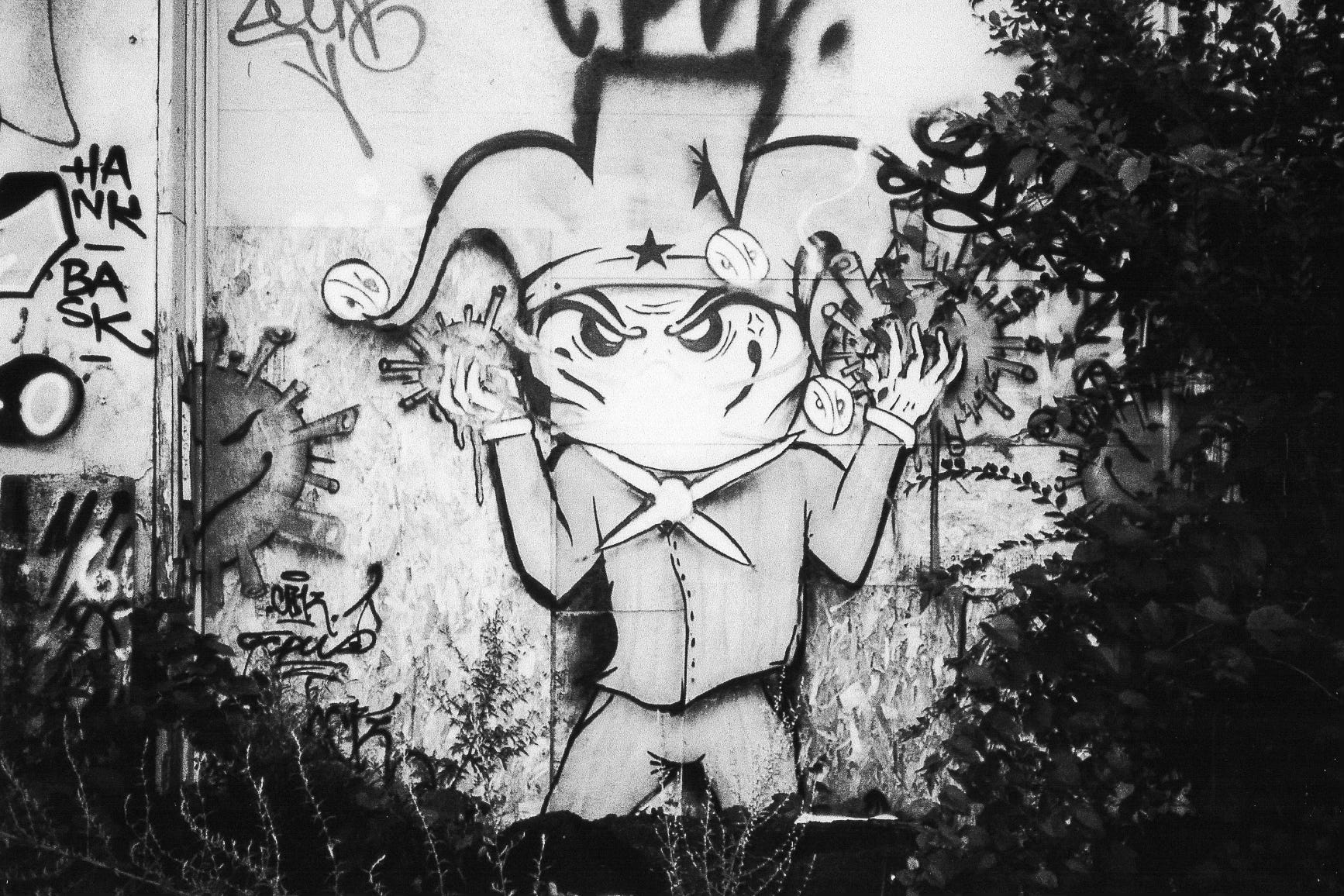
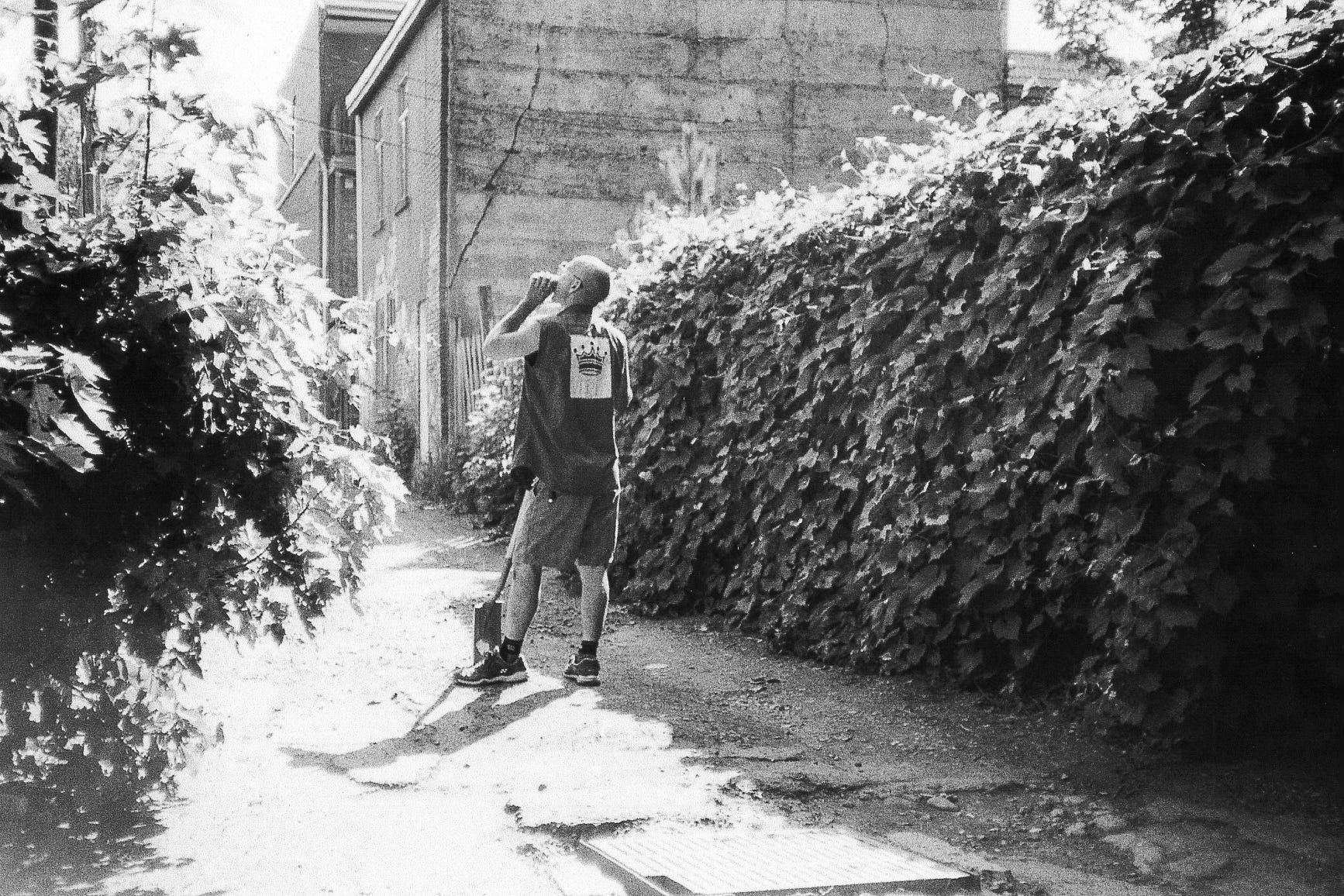
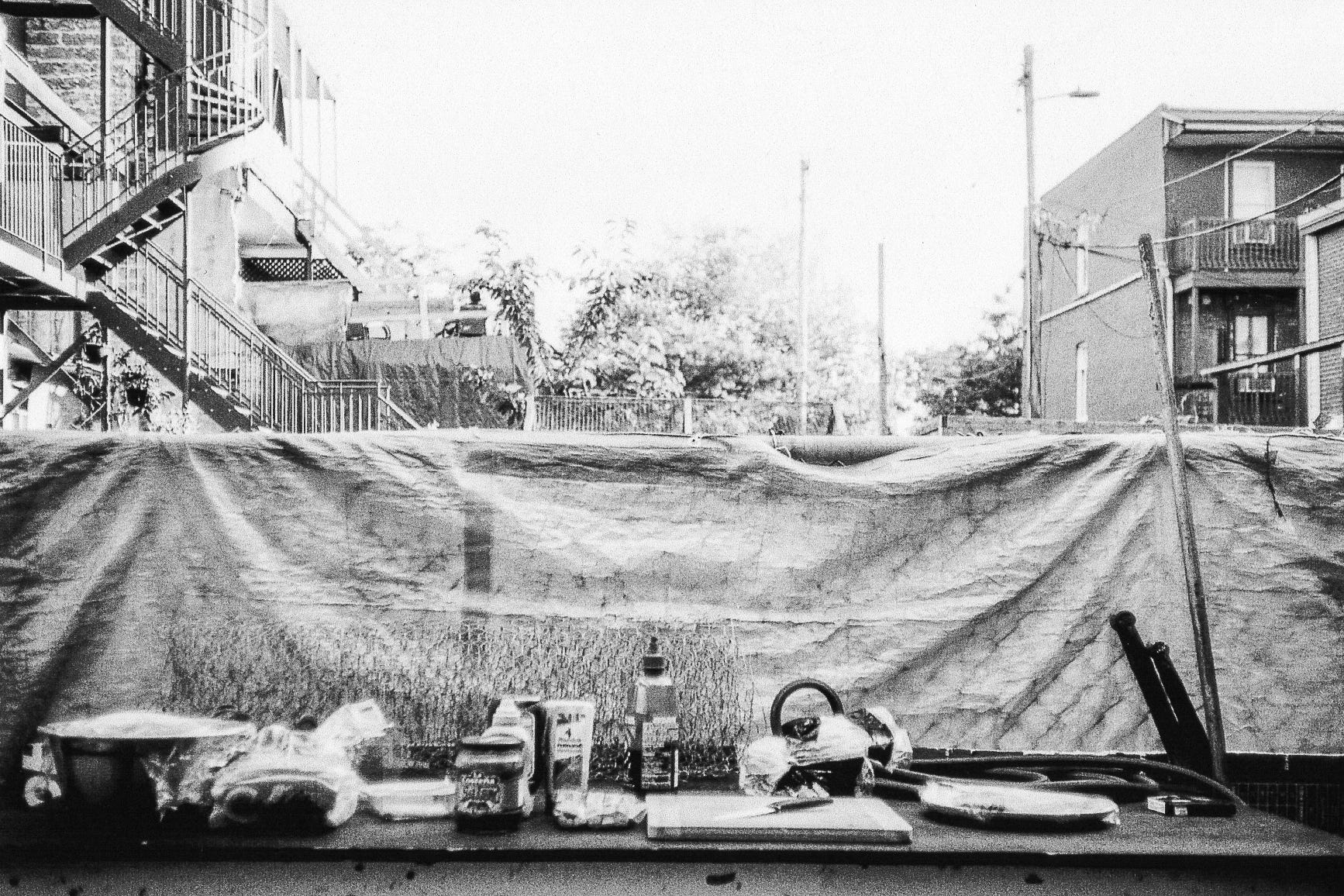
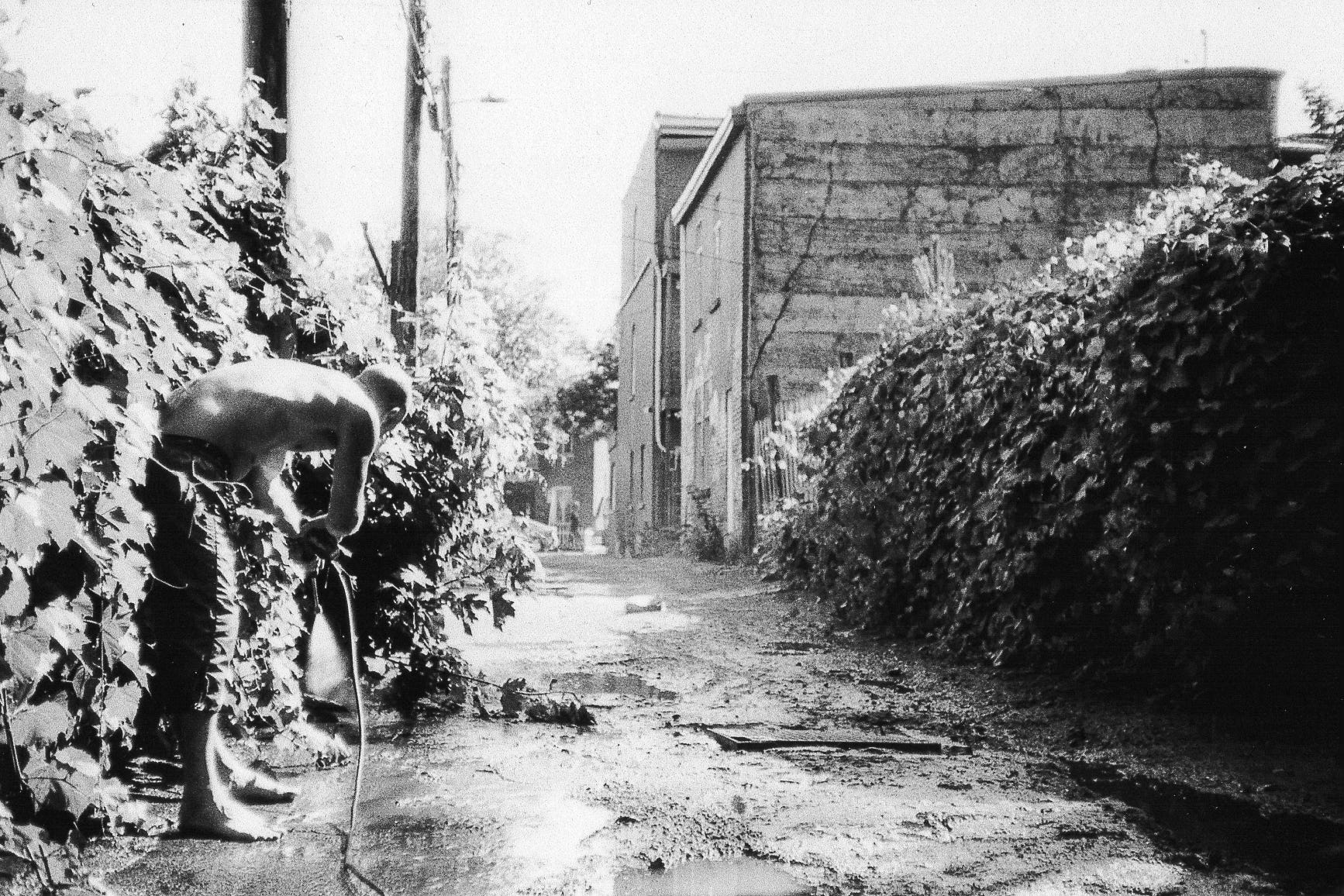
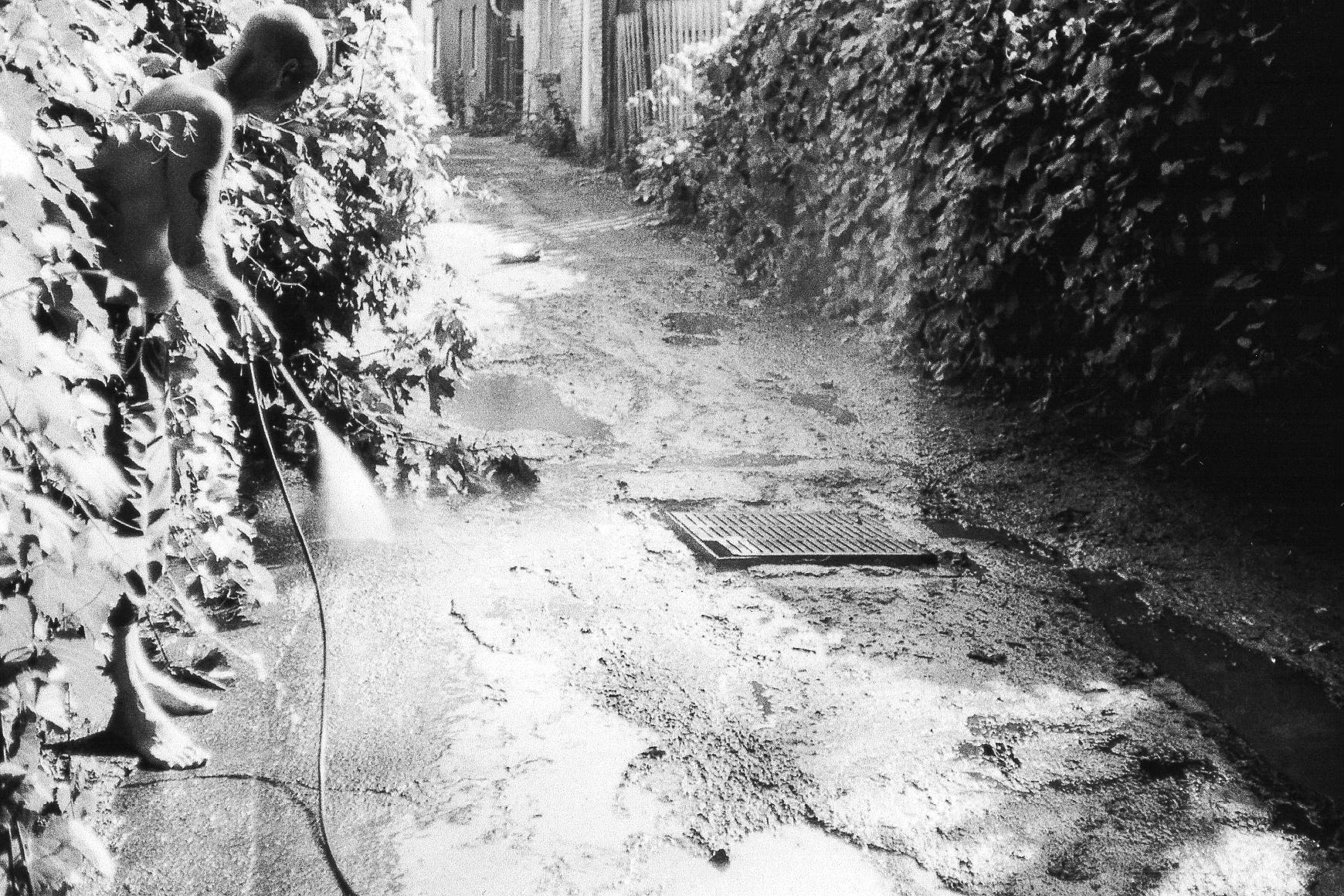
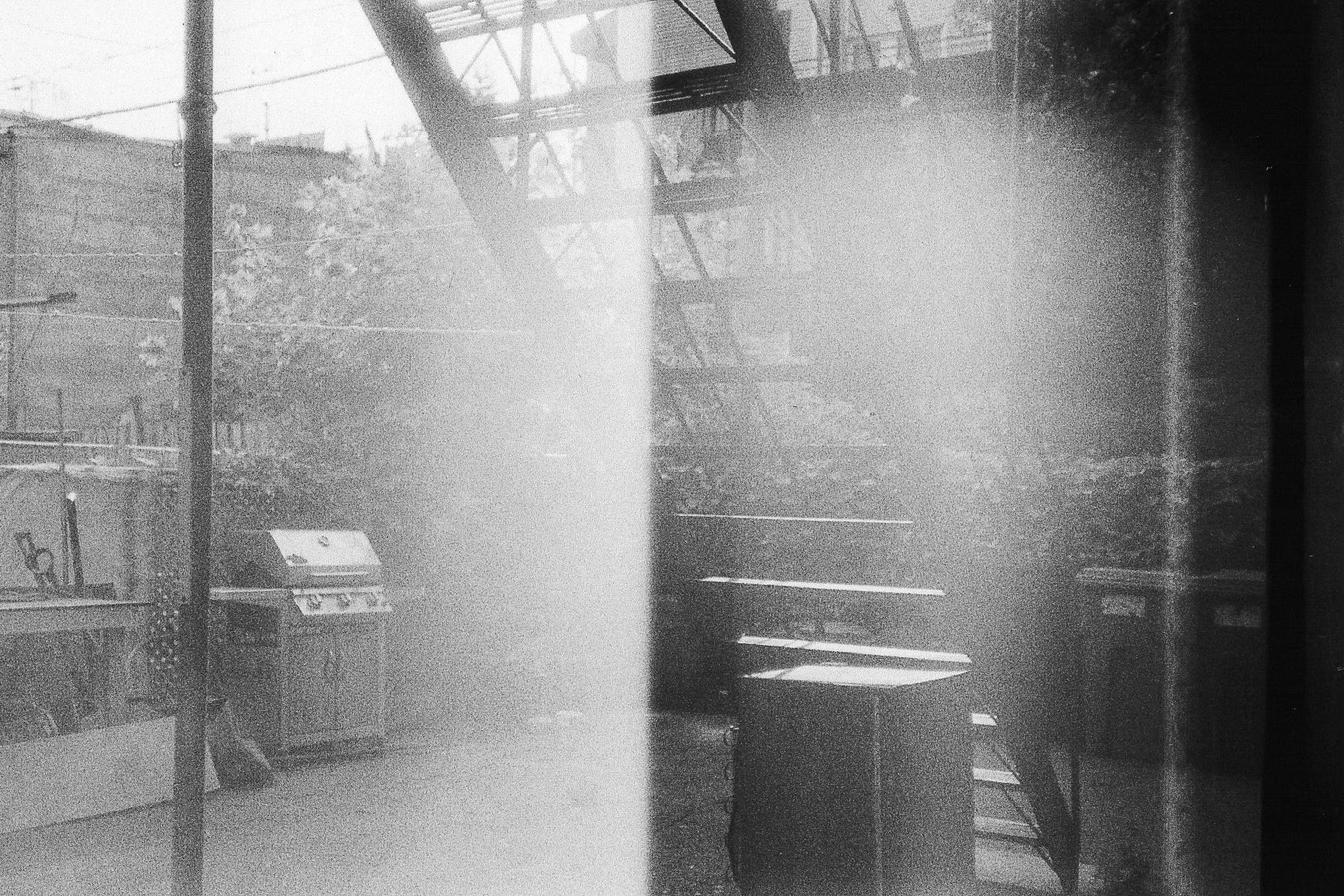
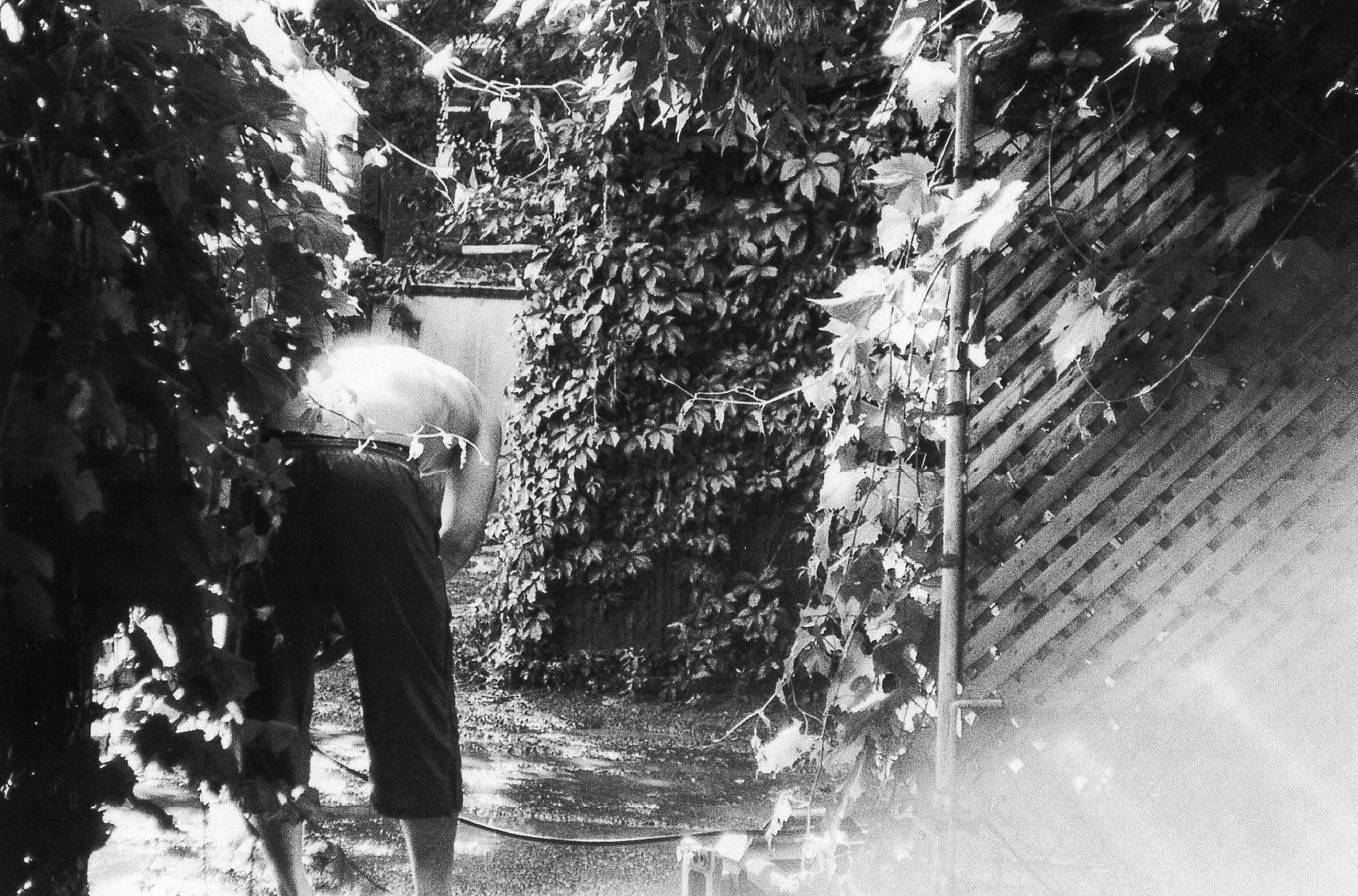
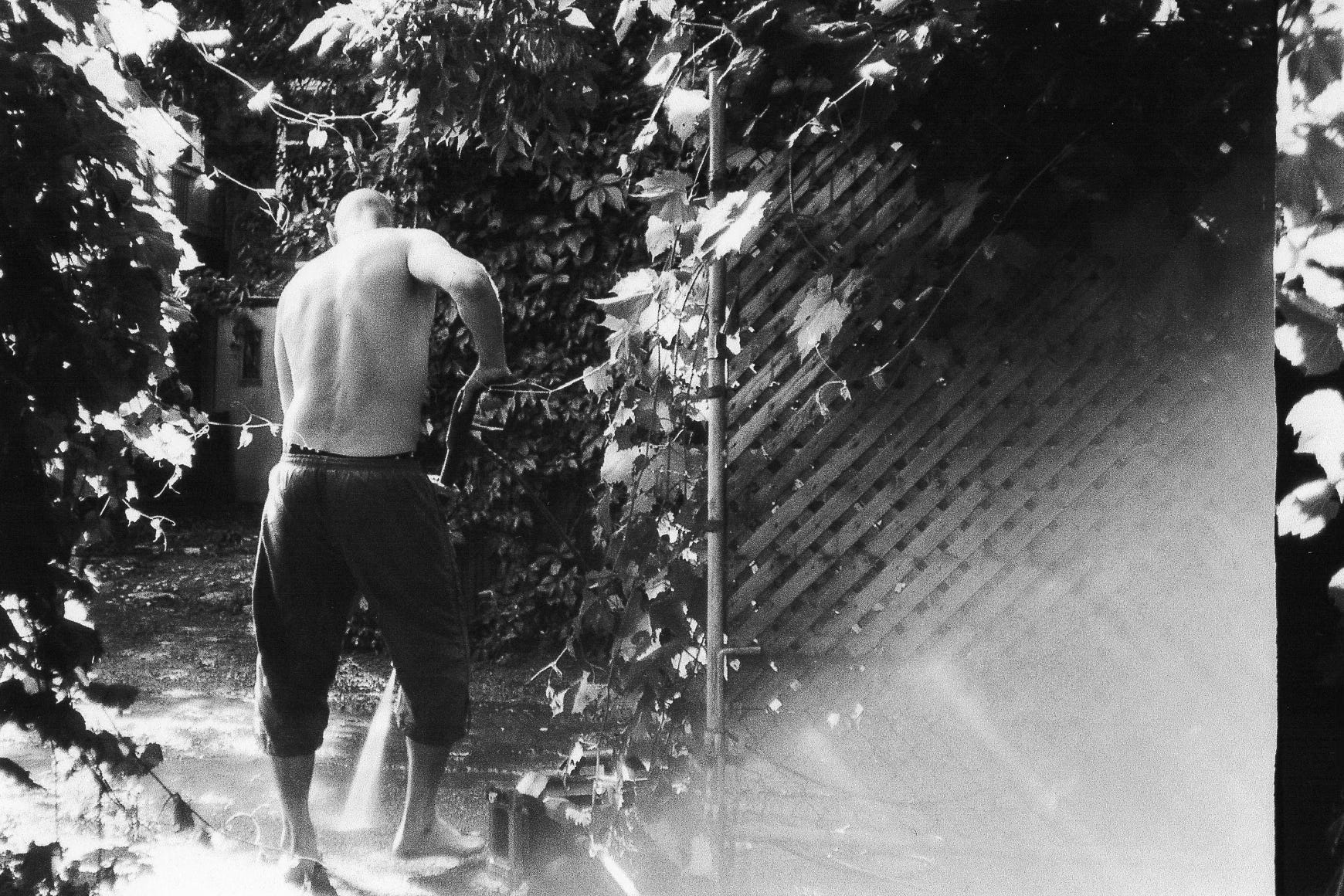
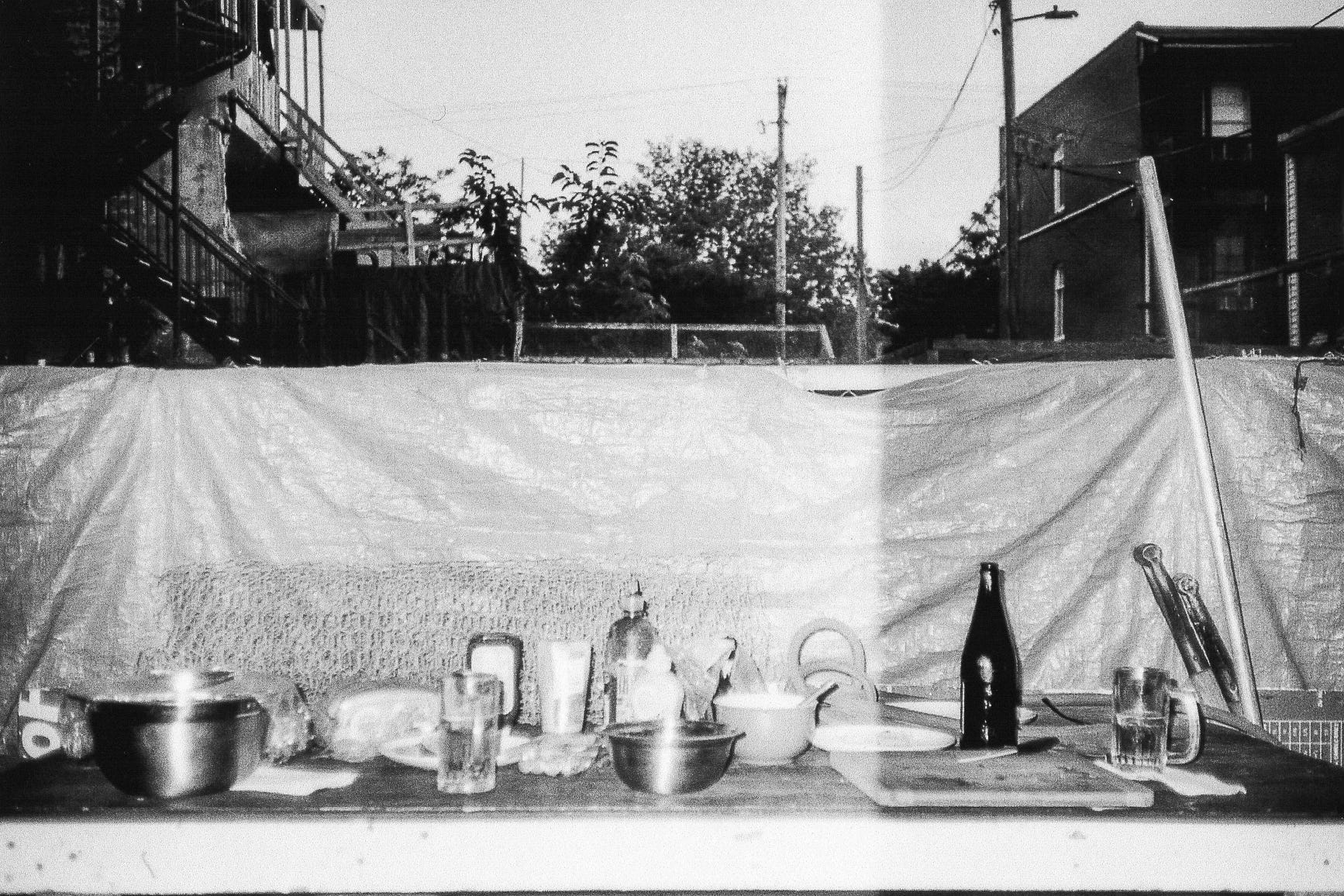
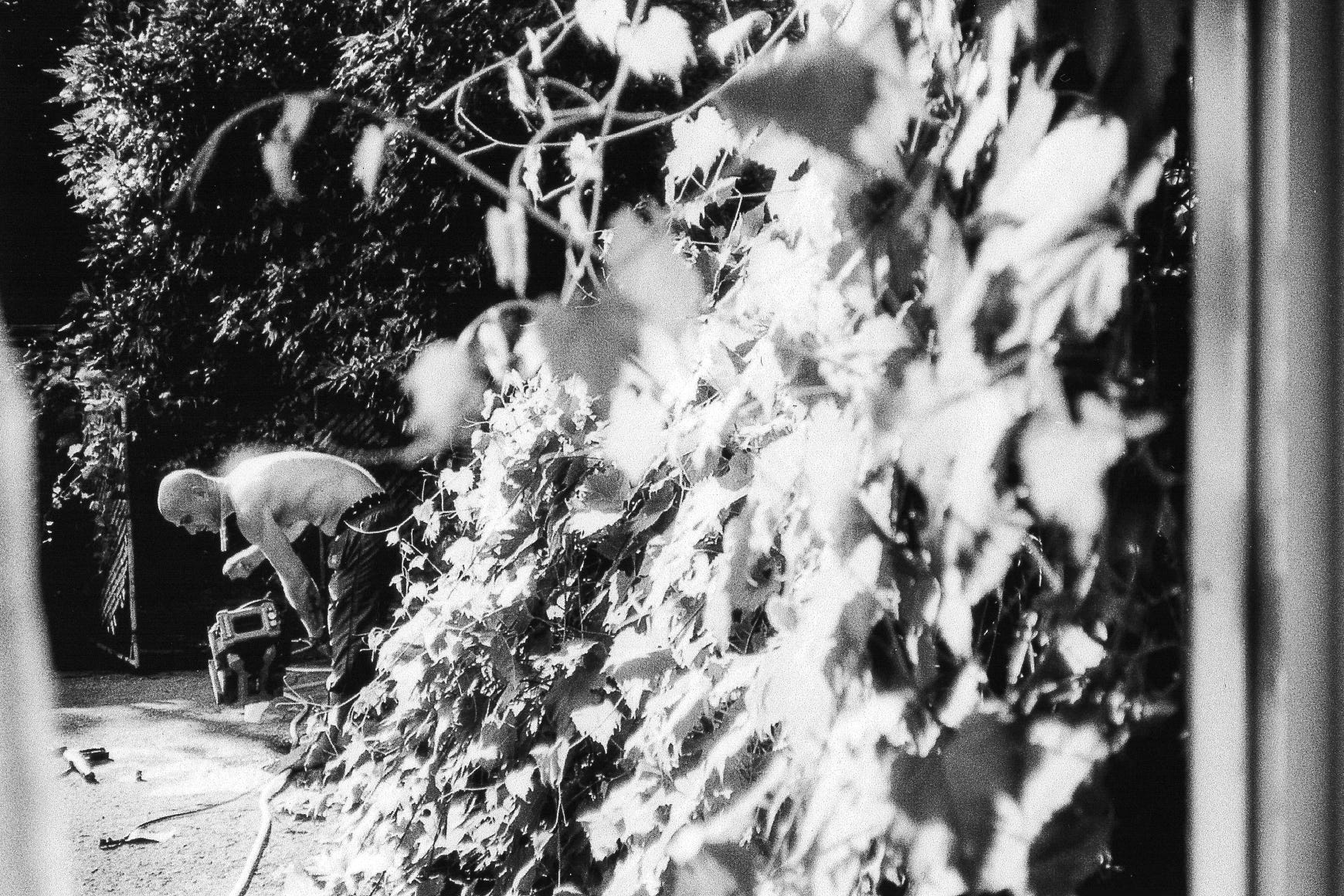
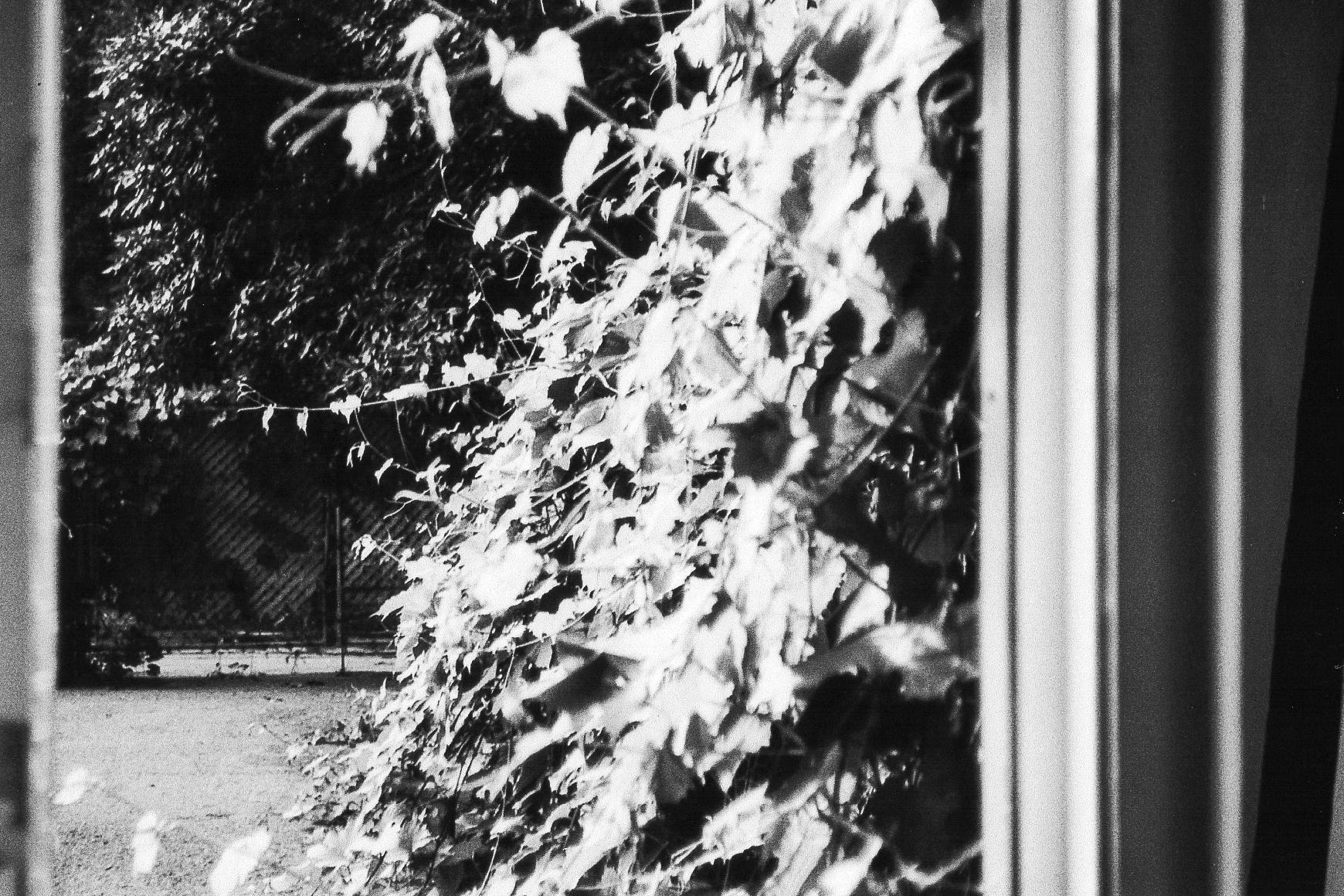
The above sequence can be divided into six sections. I’ll explain my reasoning behind each section and how the photographs of the table with food and condiments act as a sort of jump cut to advance time as we push forward toward the end of the sequence.
Images 1-8:
Images 1-8 are what I would call the meat of the sequence. They establish what the sequence is about and what I am trying to tell you, the viewer, about what I saw and interacted with that day as the Mayor went about cleaning the back alley around a sewer that would regularly get clogged up during the summer due to all the dirt and rocks from a construction site next to our apartment building.
In this section, we can feel my involvement in the Mayor’s activities through my proximity to him and the inclusion of my shadow. This implies my part in shovelling dirt into the plastic trash can (which I was doing in between taking photos) with him or at least displaying a relationship to the person being photographed by my proximity.
This part of the sequence is almost linear in nature. Those eight photographs were made within ten minutes of each other and then rearranged by me to create some narrative and movement between the images that would be both playful and engaging for viewers and draw them further into the story I am trying to tell.
Images 9-11:
This sequence is a short passage in the sequence that shows the Mayor approaching me with the shovel in his hand, followed by a jester painted on a nearby garage door, and then a photo of the Mayor with his back to me, drinking a beer and revealing a patch on the back of his denim vest of a jesters hat.
In the first part of the sequence, I alluded to some playfulness or playful interaction between me and the Mayor. This short sequence tries to reinforce this sense of play.
I do not necessarily call the Mayor a jokester (even though he was one and then some), but I hope to use these well-known visuals to imply something to you, the viewer.
Image 12:
This photo of the table of food and condiments acts as our first jump cut. It implies a break in time, both a break in clock time and a break for myself and the Mayor to eat and relax from the work being done in the preceding images.
Images 13-17:
Between images thirteen and seventeen, we have returned to cleaning the alley around the sewer.
Still, now the Mayor is using a pressure washer, and I am further away from him.
My engagement has been lessened as we see two moments of time stuttering.
The first of these two time stutters, I am out in the alley behind the Mayor as his body stands in the leafy vines growing on the fence of our backyard.
An image of our backyard follows this through a veil of some kind (my curtains), and then we see the Mayor between the gate posts to our backyard, implying both our movements.
Perhaps the Mayor has now become oblivious to me, the photographer, as the images of him become more candid.
Image 18:
We return to the table of food for our second jump cut. The lighting has changed; it is now darker, implying more time has passed since we first saw the table and moved from one cleaning activity to another in the alley.
Images 19-20:
We have arrived at the end of the sequence, and in image nineteen, the Mayor appears to be packing up the pressure washer; in image twenty, his absence in the same frame as the preceding one symbolizes an end of sorts, my fin.
In conclusion:
I have told you a story about a day in my life sometime during the summer of 2020, which may lead others to read those images differently, considering the historical relevance of that year.
They show how one goes from being very close to another human being to watching them from a safe distance, alone inside one’s home.
Through this demonstration, I hope I have conveyed some usefulness of this idea to you for your own photography.
Even if a photobook seems to be formed of one stream of consciousness from start to finish, I can almost guarantee it is broken up into subsequences, chapters, movements, scenes, key changes, whatever you want to call them (or better yet, how you best understand them), and by learning how to edit and sequence a small group of images it might help you confront the daunting task of working on a larger body of work by seeing how it can be broken up and approached differently.
I will follow up on this post with another post that uses a roll of film exposed over a more extended period, leaving “physical” gaps between time, place, and memory, to demonstrate how I put a more non-linear sequence together.
This idea isn’t a challenge or an assignment but an invitation to try it out for yourselves and see if it brings anything practical to your workflow or helps teach you anything about your images, how you see sequencing/pairing images, and ultimately, maybe make the first steps towards sequencing images a little bit more manageable mentally.
If you try this out, I invite you to share the results with me. If you are happy with them, I’ll gladly create a follow-up post with all of your results to help inspire others through your ideas (or better yet, make your post and do your best to explain your reasons for your edits and how you sequenced them).
As I said at the beginning of today’s post, I am not a professional; I am passionate, and I want to use that passion to help others as I feel comfortable sharing what I have learned and how it has applied to me practically.
Thank you for stopping by, and I’ll see you around for another entry into my world of photography; take care!
i like the narrative logic you used. of course, other non-narrative "logics" are options as well. but to tell a linear driven story, this works well.
This is a great breakdown of a sequence, Matthew. Thanks for sharing this and the fun 'assignment'. Wil give it a try.